 Smash Notes
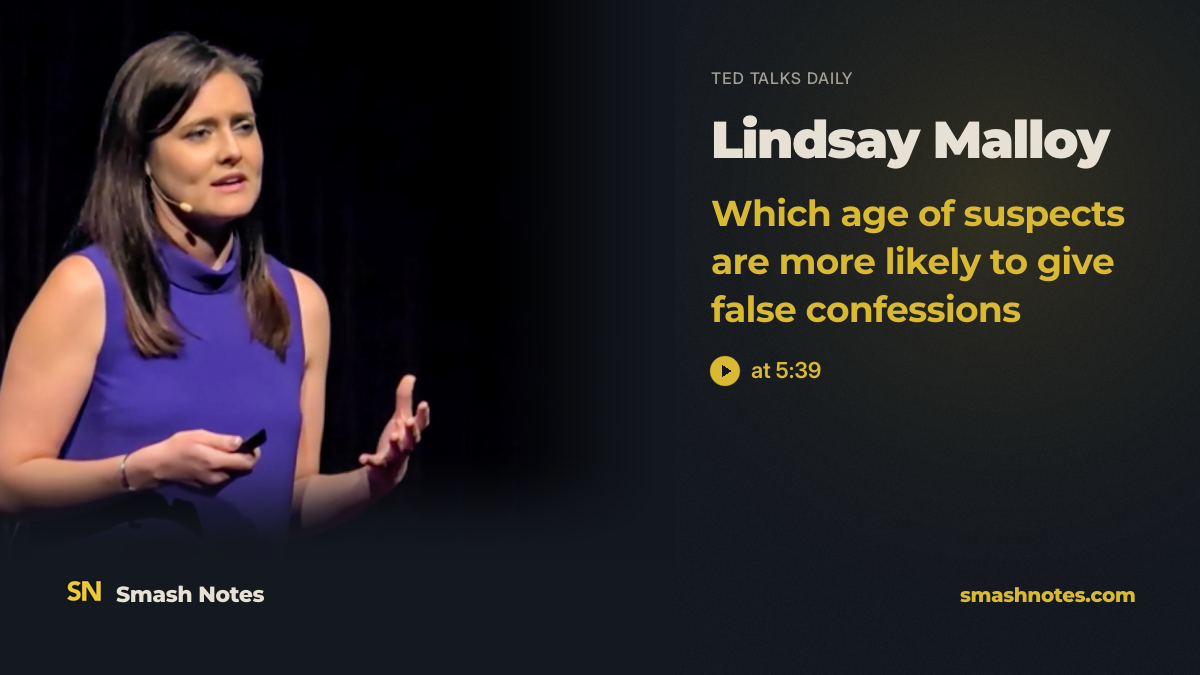
Why teens confess to crimes they didn't commit | Lindsay Malloy
Why do juveniles falsely confess to crimes? What makes them more vulnerable than adults to this shocking, counterintuitive phenomenon? Through the lens of Brendan Dassey's interrogation and confession (as featured in Netflix's "Making a Murderer" documentary), developmental psychology professor and researcher Lindsay Malloy breaks down the science…
People
Notes
-
-
Why Might a Teen Falsely Confess at 6:54
-
-
-
-
Related episodes
- 3 ways to build a happy marriage and avoid divorce | George Blair-West
- Sleep is your superpower by Matt Walker
- A juror's reflections on the death penalty | Lindy Lou Isonhood
- The lies our culture tells us about what matters -- and a better way to live | David Brooks
- The story we tell about millennials -- and who we leave out | Reniqua Allen
- Why we get mad -- and why it's healthy | Ryan Martin