Lucky #888 — My Tour of Designing Luck in China, Japan, and Korea
For episode #888, I couldn’t resist going down a rabbit hole about the number eight and what it can tell us about luck, language, money, and fate. Join me for a nerdy tour of China, Japan, and Korea, including a million-dollar license plate, disappearing hotel floors, a casino room designed around one gambler’s birthday, and the lucky number hiding in…
People
Notes
Related notes
Related episodes
-
![]() #381: Charles Koch — CEO of Koch Industries
-
![]() #521: Dr. Andrew Huberman — a Neurobiologist on Optimizing Sleep, Performance, and Testosterone
-
![]() #885: How to Simplify Your Life — Tips from Oliver Burkeman, Chip Conley, Elizabeth Gilbert, and More
-
![]() #887: Q&A with Tim — The 4-Hour Workweek in a World of AI, Rebuilding Personal Agency, The 4-Hour Body After 40, and More
-
![]() Where Do the Dollar Bills Come From?
-
![]() What to Do With Fake Money
Full transcript
The episode notes above make this conversation easy to skim.
0:02
At this altitude, I can run flat out for a half mile before my hands start shaking. Can I ask you a personal question? Now would have seemed an appropriate time. What if I did the algorithm? I'm a cybernetic organism living tissue over a metal endoskeleton. Me, Tim, Ferris, Sean.
0:25
All righty. Hello, boys and girls, ladies and germs. This is Tim Ferriss. Welcome to another episode of The Tim Ferriss Show. This episode... is a special one. It is number 888. That's triple eight. We're going to talk about it. This is going to be a rabbit hole of epic proportions, and it's going to get nerdy. It's going to get very bizarre.
0:48
And that's the point of the show is I can kind of do whatever I want to do. So I wanted to do something special for 888. I thought about doing some live casting of the I Ching, the oldest of the Chinese classics. It's a long story. Maybe we'll come back to that. But let's talk about luck. If you know anything about the Chinese ideas around luck, there's one number that stands out, and I couldn't resist.
1:12
So we're going to talk about a very expensive phone number, disappearing hotel floors, a casino room designed around one person's birthday, a car company whose name was chosen, or I should say changed, partly for good fortune. And it spans across... East Asia. We're going to dig in. Underneath all of it is one question. How do you design luck? Can you build it into a skyscraper, a brand name, a license plate? Well, a lot of people would seem to think so.
1:40
And what happens when a casino and the customer both want the room to make the money? Well, let's dig in. So it starts with a sound. In Mandarin, the sound is ba. That is eight, the number eight. And I'll say right up front that that of the languages we're going to touch upon, my strongest is going to be Japanese, then Mandarin, then Korean, which is going to be very weak.
2:02
I studied it for one year in college, like 30 plus years ago. And then my Cantonese is non-existent. So basically ignore everything I say about Cantonese. In theory, it'll make sense, but my pronunciation is going to suck. But back to Mandarin. So eight is pa, now the word Fa shows up all over the place, and you'll find it in, for instance, a common New Year's greeting, which is 恭喜发财.
2:27
恭喜发财 is like, congratulations, may you prosper. The fa is like to emerge or come out, so departure is like 出发. And then the 财, the second tone, 财,
2:42
is riches, wealth, prosperity, all that good stuff. So in a sense, the to find riches, prosperity, to have all of this emerge into your life gets represented by the which then corresponds to So there you have it. That's where eight becomes lucky. It's the resemblance. Now, in Cantonese, the match is even closer. I'm not going to try to say it because Cantonese is hard AF, even if you speak Mandarin.
3:14
But you will recognize some similarities because the writing system is the same. And also, Japan and Korea... borrowed their writing systems at one point in time from China. And we can dig into a lot of the later developments, but you'll hear, for instance, in Mandarin is going to be something like something like that in Cantonese.
3:39
It's the same characters. So that's the sound connection and why 8 is such a popular prosperity symbol in Chinese speaking communities. And this goes back a long, long ways. However, it was supercharged, it seems, in the 1980s and especially in Hong Kong. And then it kind of expanded from there. And Gordon Gekko, man, greed is good. Let's get after the money.
4:04
And I always have to laugh because some folks who are reading these texts or translated, usually mistranslated texts from Lao Tzu or whoever it might be, talk about, oh, the East. If you could only look at the contrast outside of the materialist West. And I'm like, you know, if you squint a little bit and look at some actual texts proper translations or the original text, man, everybody loves money.
4:30
And that certainly includes China. So eight, great news, eight, eight, eight, three eights, three doses of good fortune. That's linguistic compound interest. They love it. Now, look, not everyone believes this. Not everyone believes it equally. But if a customer prefers it, well, guess what? Interesting things happen to prices. So as an example, in 2003, Sichuan Airlines, paid 2.33 million yuan, about 280,000 US at the time, for the phone number 8888-8888.
5:01
So that's eight eights for a customer hotline. This is an extraordinary amount of money to spend before anyone has even said your call is important to us. But look, they explain it. The number is easy to remember and it would make customers happy. Why? Because, well, it's a good look, like we already talked about. And for those language nerds out there, Sichuan, you might run into this and say the U.S., their Chinese restaurants specialize in this particular type of cuisine.
5:27
Some think of it as spicy. Sichuan means literally four rivers.
5:35
It's actually an abbreviation related to administrative districts, but that... gets to sound too bureaucratic. So let's just stick with four rivers. In any case, this is the perfect intersection of superstition and marketing, right? Buying a number like this. Now, there are two benefits I should add, by the way, because not only do you get...
5:57
the benefit of whatever the eights mean to the customer, but you also get possibly the benefit of the PR halo and amplification around you buying the number. So I don't automatically assume that it was a bad decision, but who knows? My last conversation with Sichuan Airlines was a while ago. Anyway, license plates. In February 2025, the registration mark 88 sold at a Hong Kong government auction for 11.4 million Hong Kong dollars.
6:23
That's roughly 1.5 million U.S. Then we get to the calendar. All right, Beijing Olympics. When are we going to have the opening ceremony? Well, of course, the opening ceremony should start at 8 p.m. on August 8th, 2008. That's a lot of eights, right? On a global stage, just so happens on that same date, Beijing registered 15,646 marriages.
6:48
So there you have it. Next, we have taking... this number, this abstraction. I mean, we could get into where math lives, but that's a whole separate combo. Maybe we should bring in Michael Levin. In any case, let's talk about eights being put into the physical world. All right. The part that really gets interesting is when you stop buying lucky numbers and start building them.
7:10
For instance, Shanghai's Jin Mao Tower, 88 stories. This is going to be very common around Asia. The architect, Adrian Smith, had said that the client wanted that number because eight was auspicious. And it doesn't stop at floor count. The building also has an octagonal core and eight main superframe columns. So eight is doing double duty.
7:30
You got the cultural symbolism and then the actual structural work. shows up in ordinary apartments as well. Economists studied apartment sales in Chengdu from 2004 to 2006. Apartments on floors ending in eight resold at a premium of about 7%. In the new apartment market, where pricing was uniform, those floors didn't cost more, but they sold about a week faster instead.
7:53
And not shockingly, buyers with more eights in their phone numbers were more likely to buy the lucky floors. Yeah, well... If you like eights, you like eights. And now we can also look at the flip side, though. If eight is lucky, right? That's the whole premise. Well, it's not really the premise. It is the topic we're exploring in this episode.
8:13
What is the flip side? The flip side is four. So now it's not because half of eight is four, although we could talk about that. But we're going to turn towards something a little more morbid, and that is death. Because in Mandarin, four is si, and to die is si. That is a fourth tone and a third tone respectively. So you have like si, si, si, si.
8:35
Those are four different things. So four is, as we covered already, si, chuan, si, si. To die is si. Same consonant, same vowel, different tone. This is where heads explode if you're doing Chinese 101. Way back in the day before Chinese was super cool. This was in, god, 1996, I guess. And we started with a class of something like 32 students.
8:59
And within two weeks, we were down to like 12 or 14. People's heads just exploded. And it will make your throat sore. It doesn't matter how good you are at memorizing. If you haven't developed the musculature to make some of these sounds and tones and stuff, you just can't do it. So it is actually like weight training in a sense. But let's talk about four.
9:19
Well, in the US, you might not see a floor 13. Well, guess what? In East Asia, all over the place, you will frequently not see floor numbers with a four. That's also true in places like Vietnam, by the way. But let's talk about casinos. We're designing a place that feels lucky is practically its own art form. It isn't practically, it is its own art form.
9:40
This is a very, very important aspect of certain casino architectural plans. And in 2004, Time reported that Sands Macau replaced the slot machine's classic winning 777 with 888. Then you have Feng Shui Masters. Why not bring in Feng Shui Master? The design process can get very elaborate. In a 2005 interview, Las Vegas Sands executive William Weidner, sorry if I'm mispronouncing that.
10:06
I'm not sure how that's Americanized. Weidner described designers making 3D views of their plants, putting them on DVDs, and flying them to a feng shui master in Kowloon, Hong Kong. high-tech architecture software followed by an international trip to get the energy reviewed. So feng shui, another language sidebar. Feng shui, a lot of people have heard this.
10:26
Feng shui, feng shui, that's a one tone and a third tone, if you're interested. That literally means... Wind, water, feng shui, feng shui. So if some of you are wondering where the word typhoon comes from, pretty interesting. So in Chinese, you would say tai feng, tai feng. And then there is false cognates. That's a whole thing. So it turns out that in fact, we didn't get it directly from Chinese.
10:54
There was this convergence of people calling typhoons the exact same thing. Basically, you had Greek-informed languages then Arabic, and the Chinese all somehow mysteriously converged on the same label for the same thing. So it became this international global expression used by those involved with the maritime arts. But I digress, feng shui literally means wind water.
11:20
But within the context of architecture, a consultant for feng shui might review colors, shapes, entrances, exits, You know, where might you place mirrors? Where should things be hard edged or sharp corners versus rounded corners? All of that stuff. So for instance, at the Sands Macau, a sharp corner got rounded off, had to be done because the consultant believed the point would deflect good chi, pronounced chi.
11:46
Qi coming in from the Northeast. So if you've ever seen the word spelled Qi in Chinese, people contort it into all sorts of stuff. That is Qi. It's not exactly the same character, but like Qi is car or vehicle, same pronunciation. Qi, that is fourth tone. All right, so the corner of the building became a business decision about where good fortune might go.
12:10
Get trapped, move, you get it. Now, then there's the custom version of this. So that's designing a casino for a populace that you hope to attract to gamble. But... What if you're a high roller? What if you're a whale? Because whales get flown in from, say, Vegas on private jets. They've got millions of dollars spent on them in some cases because they will spend potentially 10 million plus in a single stay, right? Well, Architect...
12:37
Paul Heratakis, hope I'm getting that right, described a private gaming room his firm designed at the Venetian in 2012. It's a private gaming room for an unnamed high roller. A feng shui expert used the gambler's birthday and zodiac sign to shape the room's design. So having a favorite chair is one thing. Maybe you have a favorite type of chocolate they put in your room, but having a casino build you a room based on your birth information is an entirely different level of customer service slash seducing of whales.
13:09
The same 2016 reporting described Caesars VIP villas with numbers that began with eight and wind properties that skipped floors labeled 40 through 49. Remember number four. death that whole similarity people don't like it which brings back the question from the top of the show the player wants the room to be lucky for the player the house wants the room to be lucky for the house so who gets the good energy well i guess both of them do you know these players if you can blow 10 million dollars on a trip to vegas chances are you got a lot more where that came from casino architect paul steelman whose design resorts all over asia put it plainly in 2015 the buildings have to
13:44
be designed for good feng shui for both the player and the casino owner Now, it might be surprising to hear that even Uncle Sam got in on the action with all these eights. This enthusiasm reached the people who print our dear American money. One could argue we print too much of that American money, but let's not get into all that. In 2015, the U.S.
14:02
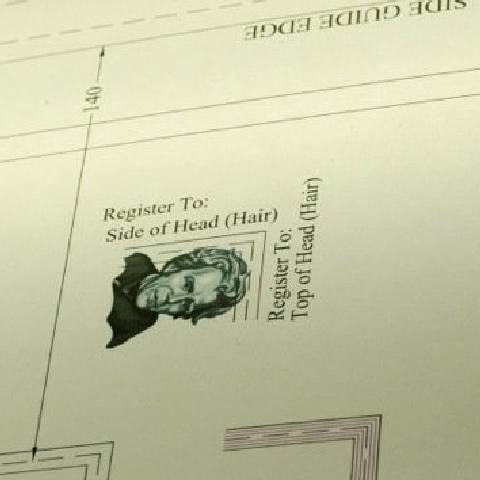
Bureau of Engraving and Printing offered an uncut sheet of eight $2 bills, all with the serial numbers starting with 8888. Face value, $16. Retail price, $16.
14:13
can be yours for $58.88. And the production limit, 16,888 sheets. Now let's go to Japan. Near and dear to my heart.
14:25
There's an exchange student when I was 15. Changed my life and haven't really formally studied Japanese since. But turns out if you are manga otaku and gariben, you can retain a lot of it. So the character for eight is the same. So Japan brings over the Chinese writing, which they call kanji, hanzu. But there is a problem. Chinese does not quite work for Japanese 100%.
14:52
It's kind of a force fit. Because if you look at, say, Chinese, the grammar is very, very, very simple. So you can say any number of things. The word order is kind of the same as English. I go to school would be I go school, for instance. And there are exceptions. You could say, or something like that. But suffice to say, the grammar is really simple.
15:12
Chinese doesn't have... conjugation, as you might think of it. So past, present, future with verbs, as in the English of I went, I go, I will go, that type of thing. Doesn't really exist in Chinese, but it does exist in Japanese. So what do you do with those leftover sounds? Because the ideograms from Chinese each have a meaning. But if you're just trying to force fit Japanese, you need a way to use something phonetic, just like the alphabet in English.
15:40
And so over time, over centuries, And that involves Buddhist monks and scholars using something called katakana to annotate different texts. And it involves Heian period Japanese women using cursive script. There's a lot that goes into it. But the Japanese figured out, also wanting to promote literacy in the country, two different syllabaries, which are kind of like alphabets.
16:05
So they are referred to as syllabaries because they're syllables. Instead of A, B, C, D, E, it is kakiku keiko, mami mu me mo. That type of thing. They are syllables. And there are two sets of 46, I think, because it's been 35 years, that basically allow Japanese people to write Japanese words that don't transfer well or don't allow Chinese characters to be overlaid very easily.
16:30
And they're used for all sorts of other stuff, like sound effects in comic books or foreign words, etc., etc. But they still retained a lot of the Chinese characters. And to be basically literate in Japanese, you have to learn the fundamental characters, which are the joyo kanji. And at least when I was there, there were 1,945. So you still got to do some heavy lifting.
16:54
Now, the character for eight... in Japanese is read hachi. So instead of ba, it's hachi. And there are multiple ways to pronounce this in Japanese, but I'm going to do a little visualization exercise. So imagine the capital letter A. Okay, take out the crossbar in the middle. Now you're left with this upside down V. At the very apex of that, let's call it pyramid, create a little gap, just erase the very tip so there's a little gap.
17:23
Now it looks kind of like a mustache. Two strokes that spread apart towards the bottom. Now that widening shape suggests prosperity that grows over time. There's actually a word for this. In Japanese, of course there is. Just like they have komorebi, like dabbled light through trees. They've got a lot of good words. This one is suehirogari.
17:45
So suehirogari. So sueh is like the end or the future, and hirogari is expanding. And this was originally, I shouldn't say originally, but long ago used to refer to something like a Japanese fan. So as it sort of extends it widens or spreads and that can be applied in a lot of different places but Suffice to say, there's an auspicious widening towards the end, looking out into the future.
18:15
That character for the nerds out there like Japanese, Sue, is also Matsu. So you could have, for instance, Shu Matsu is weekend, literally. Week, Shu Matsu, Shu Matsu, or like Nen Matsu, end of the year, and on and on and on. All right, I'm going to stop that there because that could go on forever. But let's talk about Japan in 8th. Eight's still a big deal.
18:37
One of the biggest brands in the world had a Lucky Eight story hiding in its name, still has it hiding in its name. All right, the founding family's name of this company is Toyoda, Toyoda, okay? That's with T-O-Y-O-D-A with a D. You can probably guess that company became Toyota, Toyota, because in Katakana, which is one of those syllabaries I talked about, Toyota, Toyota is eight strokes.
19:04
In other words, you're putting pen to paper for eight lines, keeping it simple, that create this name Toyota instead of Toyoda or Toyota, Toyota. Anyway, you get the idea. Eight strokes are associated with wealth and good fortune. So they changed their family name to a company name that embodied the eight strokes. But we can go way further back.
19:25
Japan also has the Shikoku pilgrimage. We can ask my friend, Craig Maude, probably the person who has walked more of Japan than any living human. In this case, the Shikoku pilgrimage is a circuit of 88 Buddhist temples associated with the Kukai, also known as the Kobo Daishi. And it just goes on and on, guys. The eights are everywhere. The temple count has its own religious history, but it's a lovely numerical detour.
19:48
88 can take you from casino villas to a pilgrimage around an island and obviously doesn't end there.
19:58
This episode is brought to you by AG1, which I have taken for more than a decade. Man, it's coming up on close to 15 years, I would say. Longtime listeners have heard me call it my nutritional insurance, and that is exactly how I use it. The news today is they just launched AG1 Pro, designed for people focused on performance and longevity.
20:17
I'll be traveling soon. I'm actually packing today, and I'm throwing a bunch of these in my bag to cover my bases while I'm on the road. And I have noticed, perhaps some of you have, that it is harder and harder to put on muscle and to keep on muscle. I am a young 40...
20:35
years old, and I've noticed that change. So past a certain age, you may be that age. Maintaining lean muscle becomes priority number one, and AG1 Pro is formulated to support exactly that. It includes HMB, a clinically studied compound that supports protein synthesis and helps reduce muscle breakdown, plus zinc carnosine to support the gut lining.
20:56
So remember, training is only half the equation. You have to feed the machine. And as you get older, there's certain things that can help turn the dials just a bit in your favor. Recovery is where the work compounds and AG1 Pro is built to support it. It's NSF certified for sports. So what's on the label is what's in the pouch. Get your free AG1 Pro Yeti shaker in the welcome kit at drinkag1.com slash Tim.
21:21
That's drinkag1, the number one. So D-R-I-N-K-A-G, the number one, dot com slash Tim.
21:33
Let's talk about Korea. This is where I'm going to make all sorts of mistakes. So my apologies to the Koreans who may be listening. I would love a language lesson. I think it is such a cool language and would love to improve my Korean. But here's the connection. So the Korean language has two sets of numbers, and one of them was borrowed from the Chinese centuries ago.
21:54
In that set, eight is pal. So kind of like P-A-L. P-A-H-L. And unfortunately, pal doesn't sound like any word for getting rich. So the Chinese prosperity pun doesn't survive the trip to Korea. But Korea ties eight to something even bigger, fate. All right. So Korean fortune telling. is built on your birth chart. And I'm sure there are multiple types of Korean fortune telling, just like in Japan.
22:23
You'll see them at train stations and other places like uranaishi. So people sitting at a table and they'll have paper in front that says uranaishi, which is fortune teller. In any case, I'm sure there are multiple types. But one type of Korean fortune telling is built on your birth chart, which is called sajupalja. So Saju Palja is pulled from the Chinese characters.
22:43
There are four characters, which mean four pillars, eight characters. And just to explain that, the four pillars are year, month, day, hour you're born. And then in the traditional Chinese calendar, each of those is written with two characters. So four times two is eight. And boom, those eight characters map out your whole life. Now, coming back to why this contortion is helpful, the shorthand, palja, literally eight characters, is the everyday Korean word for your fate, your lot in life.
23:13
So in Korea, eight isn't just the sound of getting rich. It's built right into the word for destiny. And surprise, surprise, four's dark side makes the trip too. So in the same set, four and death can both be read sa. So Four is not going to be selling on license plates for very, very high prices. And just like you might replace or omit the 13th floor in a place like the US, some Korean elevators replace the fourth floor number with the letter F for four.
23:44
All right. One last thing, because I was looking this up myself. 666. Uh-oh. Yeah, we're going to talk about 666. So 666 is thought of as...
23:56
the sign of evil or the number of the beast in the West. And that comes from the book of Revelation chapter 13, verse 18. And that is related to challenging the reader to calculate the number of the beast, stating it is the number for a person. Its number is 666. So generally, boo, 666, not a good thing in the West. Now to dismiss one commonly held misbelief or however you want to put it.
24:28
As someone who has listened to a lot of heavy metal in his life, there is a hand signal that a lot of people use at heavy metal concerts, which is the ring and middle finger bent towards the palm, thumb wrapped over, pinky and index up in the sky. Now, there are some internet conspiracy theories that claim the curled fingers and extended pinky index, et cetera, form three overlapping sixes.
24:51
But guess what? This is not true. This heavy metal gesture, so to speak, is actually the mano cornuta, the horn hand, which is an old way of warding off the evil eye. Ancient Mediterranean protective symbol. that has been used for centuries in Southern Europe and Italy. And boom, you can ward off the malocchio, the evil eye, or bad luck, or you can use it to protect yourself from somebody with bad vibes, negative energy.
25:19
You get the idea. So how did this get connected to heavy metal? Well, Here we go. Black Sabbath, one of my favorite bands of all time. You might recognize the front man, Ozzy Osbourne from back in the day. He was famous for throwing up a peace sign during and after concerts. Well, when they got a new vocalist, Ronnie James Dio, when he joined the band in 1979, he wanted a signature gesture.
25:43
He wanted something he could use, but he didn't want to copy Ozzy. So what did he do? Well, Dio grew up in an Italian-American household. And his very superstitious Italian grandmother used to use that hand signal, the mano cornuta, to protect herself from sketchy people or some odd ball who she thought might be casting bad luck. So guess what? He borrows grandma's hand signal and starts using it at concerts.
26:08
Boom. Black Sabbath becomes associated with that. And then bada bing, bada boom. There you have it. Heavy metal. All right, why am I getting into all this 666? Well, because 666 is not bad news or bad luck everywhere. In fact, in Chinese, 666 can sometimes be good luck. You have 六六大顺, which is similar to something like 一路顺风, which is like a bon voyage, may you have the wind at your back and smooth sailing on your journeys.
26:40
And this 666, Sounds like it could be liu, like smooth, but it could also be lu, like a road, a path. So when on Chinese New Year, people get these little packets of money in these red envelopes called hongbao, Sometimes the amounts will be in sixes. So 600, 666, whatever it might be. So that is just to say that whether a number is good or bad luck really depends on where you are.
27:11
And actually, there's a lot of disagreement. Even within China, you look at different dialects and how things can be pronounced. It comes down oftentimes to just what that sound is. is similar to across the board. All right, so let's sign off. There's one last eight related detail also has a six in it. So in Chinese internet shorthand, eight, eight can be bye-bye because baba sounds a lot like bye-bye.
27:39
You will hear that a lot in China, in Taiwan. Bye-bye. Which you can write in Chinese characters. So after an entire episode about prosperity, fate, and very expensive numbers, I get to sign off with a cheap version. And that is 8-8. Bye-bye. So bye-bye. But you can say bye-bye-la. Bye-bye-lio. I'm going to leave it at that guys. Hope that was nerdy enough for you.
28:00
I can't imagine they're going to be show notes on this, but who the hell knows, maybe we'll create some show notes. So thanks for indulging. This is the first time in my life that I've been able to actually pull out some of the East Asian studies stuff from the dinosaur age when I was in college. So thanks for listening. And as always. Until next time, be just a bit kinder than is necessary to others, also to yourself.
28:22
And you know what? Embrace your weird self. If you're into all this bizarre stuff like I am, hop into Chinese numerology on Wikipedia. Check out that page. And maybe I will come back to that I Ching live casting because that is a weird book. If you can even call it a book, that'll be my cliffhanger. Until next time, thanks for tuning in, guys.
28:42
Hey guys, this is Tim again. Just one more thing before you take off. And that is Five Bullet Friday. Would you enjoy getting a short email from me every Friday that provides a little fun before the weekend? Between one and a half and two million people subscribe to my free newsletter, my super short newsletter called Five Bullet Friday. Easy to sign up, easy to cancel.
29:02
It is basically a half page that I send out every Friday to share the coolest things I've found or discovered or have started exploring over that week. It's kind of like my diary of cool things. It often includes articles I'm reading, books I'm reading, albums perhaps, gadgets, gizmos, all sorts of tech tricks and so on that get sent to me by my friends, including a lot of podcast guests.
29:25
And these strange esoteric things end up in my field and then I test them and then I share them with you. So if that sounds fun, again, it's very short, a little tiny bite of goodness before you head off for the weekend, something to think about. If you'd like to try it out, just go to Tim.blog slash Friday, type that into your browser, Tim.blog slash Friday, drop in your email and you'll get the very next one.
29:49
Thanks for listening.