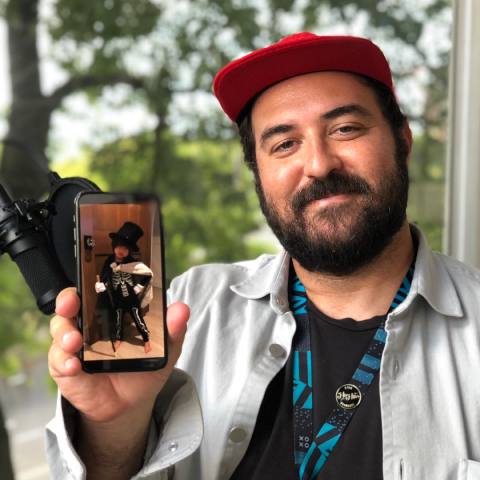
What Did Adam Lisagor Do on Paternity Leave?
Adam Lisagor · Kirill Zubovsky
Adam Lisagor decided to take four weeks of paternity leave when his son was born, then brought a work computer home and edited three commercials he had just shot for Igloo. Mac World came, took a picture, and ran a little article while he looked like hell, a new dad sitting in front of the work computer. The memories of the first month as a dad are tied to sitting at the computer instead of being attentive to the newborn, and it was a big mistake.
In his twenties, while he was learning everything, there was nothing to lose. He sometimes worked six or seven days a week and did not leave the office until 11 or 12, to prove he could do it the best. Putting that amount of care into the twenties was useful. By the time he started his own company he knew bootstrapping, he put in the hours, he took the risk, and he got the reward.
Once the company did not feel like it was going to go away any time soon, he eased off the gas pedal, stopped working weekends, and let people around him do some of the heavy lifting. The shift lined up when he and his partner were ready to have kids and had a comfortable income, so he knew he was not going to work so hard that he would miss being part of raising them. By the second time around the right pipeline was in place, and he would not have to edit on leave.
Adam Lisagor. How to start the world's best video production company in LA. ·
From the transcript
You know, I think being a founder and apparent wasn't is hard to do because I always prioritized work life balance in my in my company, no matter what. Because ah, I just wasn't ever Somebody was willing to do that amount of sacrifice Put that amount of sacrifice into my vocation. I did in my twenties while I was learning everything. And there were, you know, there was nothing to lose.
And, you know, sometimes working six or seven days a week and not leaving the office until 11 or 12 was it was just something that you do because you need to.
You need to prove to yourself that you could do it the best. You know, you need to show
that, uh, that you care enough like it sze useful toe like spend your twenties putting in that amount of care. And then by the time that I was able to start my own company I knew what that experience was like bootstrapping and getting off the ground. I certainly put in those hours. But it was off,