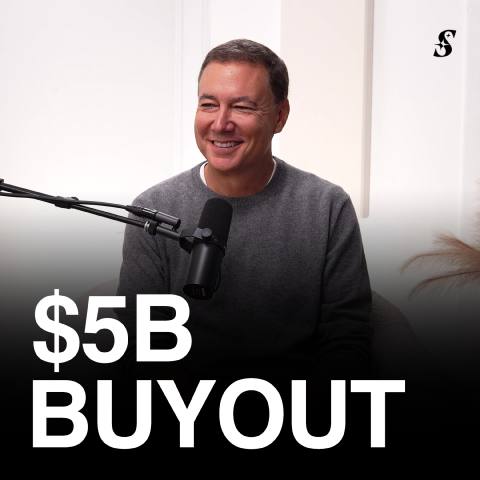
Back to Apollo’s Yahoo Playbook, 5 Years After the $5B Deal, with Jim Lanzone.
How Is Apollo's Yahoo Turnaround Different From a Typical Buyout?
Jim Lanzone says people always ask what it is like to work for private equity, and the reputation is not always good. His experience has been the opposite. He still talks to Reed Rayman almost every day, five years on, and Rayman wore a purple hat that said Make Yahoo Great Again. Private equity wants an outcome, an IPO or a sale, not a company it holds forever. Apollo treated Yahoo as one of the few deals with asymmetric upside, rather than a standard playbook you just run, and hired a team that would not have joined to strip the company.
Jim calls himself a growth person. He does the turnaround to reach the part where you invest and build new things for a huge audience you inherited, and he says that is how Apollo has treated Yahoo the whole time. He has worked for venture capitalists, including Bill Gurley, and for Barry Diller and Les Moonves. He has not found his Apollo team harder to serve than those people.
Apollo’s Yahoo Playbook, 5 Years After the $5B Deal ·
From the transcript
And then that leads into, you know, all the different steps of a turnaround that come after. So I think this is interesting because there's so many different angles to this. Like I just had a conversation with bending spoons, which is the opposite of a PE playbook, but this is also not really traditional PE turnaround because you're leading the way.
It's not like the private equity companies coming in and kind of just stripping out as much as they can, but you're really ushering this. So talk about how that's different for you and maybe the traditional like Apollo PE playbook. Yeah. I, um,
It's interesting because I would have people– I still have people always ask me, what's that like working for private equity? The reputation isn't always great for how they're going to manage these things. But I've had the opposite experience. Reid, I still talk to him almost every day in some form five years later. He