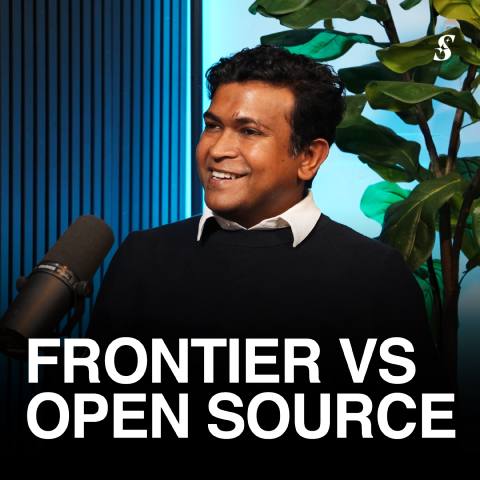
How Far Behind Are Open-weight AI Models?
Molly O'Shea · Jonathan Siddharth
Jonathan Siddharth says open-weight models are about three to six months behind the frontier, depending on who you ask. Enterprises are picking them up because the models are getting good enough for a company to own its own implementation.
He wants frontier AI and sovereign AI together, not a contest with one winner. Frontier labs, including OpenAI, Anthropic, and DeepMind, are pushing superintelligence he thinks could help cure diseases, discover new materials, and colonize space. Plenty of company work does not need a trillion-parameter model. An invoice-to-pay reconciliation, an HR workflow, a board deck, or an all-hands can sit on a custom model tuned to the company's own data, tools, and taste. Open-weight models let the company keep that system, and the learning in it, instead of handing the identity of the workflow to a rival. Thinking Machines and Reflection AI are among the open efforts he names.
Frontier AI Is a Ferrari. Most Companies Need a Model Y | Turing CEO ·
From the transcript
And so enterprises are getting into this. And a big part of what's driving this is open weight models getting very good. Today, depending on who you talk to, like open weight models are maybe like three to six months behind the frontier. Kimmy K3, DeepSeq, Quen, these models are, and companies like Thinking Machines, Reflection AI are also doing great work.
So as these open weight models they are democratizing AI for enterprises to own their sovereign implementations. And today there's sometimes on X, like things are always quite polarized. Oh, it's a huge debate. It is like the hottest topic all the time, every time. Yes. There's this big tension between frontier AI and sovereign AI.
And I think we need both. I have so much respect for OpenAI, Anthropic, DeepMind, MetaXAI, and all the frontier labs that are pushing superintelligence forward. Frontier AI is how we