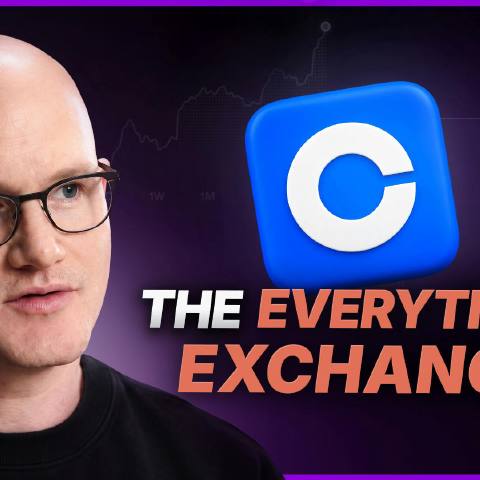
Brian Armstrong
Related people
Episodes
- Coinbase’s Everything Exchange: Agentic Finance, Stablecoins, and Tokenization with CEO Brian Armstrong
- The Man Behind Coinbase: Interview with Brian Armstrong | KMP Ep.52
Notes
The Builders · Garry Tan Decides Who Gets to Build the Future
-
How Does Y Combinator Vet a Founder in 10 Minutes?
Garry Tan says Y Combinator vets a founder in a 10-minute interview that ends in an up-or-down decision. The firm now gets 80, maybe 90,000 applications a year for about 800 spots, an acceptance rate under 1 percent. Maybe 8 to 10 percent of applicants get an interview, sometimes less. Paul Graham figured out that a half hour or an hour was unnecessary. Five minutes would probably do, and five minutes feels rude, so the interview stayed at 10 minutes.
The limit works like the old 140-character cap on Twitter. In the window, Tan wants a real person, a problem, and a plain account of how the technology solves it, plus why the idea is worth building. If a little time is left, he wants to know
All-In · CoreWeave Crash, AI Trade Cracks, Anthropic IPO Red Flags, Bill…
-
Why Did Coinbase Fine-tune a Small Model?
David Sacks says Brian Armstrong posted, the day before Anthropic's blog, that Coinbase had fine-tuned an open-weight model with 9 billion parameters. In testing it cut fraudulent transactions by about 30 percent, and it was faster and cheaper than Opus 4.5. Nine billion parameters is small. It will not fit in a Roomba, and it will run on a home computer.
Sacks says a lot of enterprise work does not need a frontier model. It needs a small specialist trained on the company's own data, so the company keeps the model. As compute gets tighter, a smaller model squeezes more work from each GPU. His read is that every workload gets its own customized model and uses a fraction of the compute and th
No Priors: Artificial Intelligence | Technology | Startups · Coinbase’s Everything Exchange: Agentic Finance, Stablecoins, and…
-
Why Don't Card Fees Work for AI Agent Payments?
Brian Armstrong says a debit or credit card's typical minimum is about a 30-cent flat fee plus a percentage, so it does not really work for anything under a dollar, and paying 30 cents to send a one-cent payment does not make sense. He believes the last figures put about 76% of the agentic commerce transactions Coinbase is seeing under $0.30.
Those small payments are mostly information. A research shop might compile paywalled data, or one specialized agent might call another, almost like a tool call. He wants agents to hold their own spend accounts, the way an employee does, and he expects a stablecoin-backed card where an old checkout page still asks for one. A growing share of agent payme
-
What Is Coinbase's Everything Exchange?
Brian Armstrong says Coinbase's everything exchange is one place to trade every asset class, with stocks, commodities, crypto, derivatives, perpetual futures, and prediction markets sharing liquidity and cross-margin.
That trading business is the core. The next area is stablecoin payments, which he says keep growing even when Bitcoin prices are down. Those payments are fast, cheap, and global: under one second and under one cent to move money anywhere in the world. He calls that money moving at the speed of information. Emerging regulatory clarity, in his account, is also opening the exchange in more countries. The third area is artificial intelligence changing financial services, which Coi
-
What Are Freedom Cities?
Brian Armstrong says Freedom Cities would set aside 10 or 100 square miles of federal land so builders can skip ordinary permits and test nuclear power, drug discovery, crypto, drone delivery, and data centers in a contained sandbox.
Coinbase invested in Prospera, in Honduras, to learn what was going on. Prospera has had a mixed up and down with the local government and is getting closer to a resolution. He thinks Prospera will make it. A little more interest in the approach showed up before the most recent Trump administration, because deregulation has created a lot of opportunities in the United States. The campaign idea uses pockets of land the federal government already owns. On the cho
-
What Has New Limit Reprogrammed in Mice?
Brian Armstrong says New Limit has reprogrammed at least one human cell type in humanized mouse models. Testing in non-human primates is underway, and the first phase one clinical trial launches next year.
At a series of dinners, people named epigenetic reprogramming as high potential and underfunded. Shinya Yamanaka's lab had early results showing cells could be reprogrammed to restore function they had when younger, but the lab changed the cell type, and New Limit did not want to do that. He could not stop thinking about epigenetic programming for three months, the same way he felt about Bitcoin in 2010 or 2011, and he treated the motivation as perishable. The dinners brought together Jac
-
Why Did Brian Armstrong Start New Limit?
Brian Armstrong started New Limit because he saw few great teams in longevity and thought a lot of the field was snake oil. He likes being a builder and thinks he is probably better as an entrepreneur than as an investor. Some of his investments amount to hoping a cool outcome happens, and once in a while someone has to remind him that the point of investing is to make money.
Coinbase went public in 2021, very profitable after a 10 year journey. He asked whether he wanted something different or was only at the beginning, and he decided he was just at the beginning. The mission of increasing economic freedom was just getting started. About half of 1% of global GDP was running on crypto, with
-
Can Prediction Markets Help Choose Government Policy?
Brian Armstrong says a prediction market can help choose a government policy by asking what the unemployment rate would be in one year, two years, and three years if that policy went into effect.
Inside the Coinbase app, he says the markets are growing very fast. Within months of launching, they hit about a $100 million revenue run rate, a figure he believes the company shared on its last earnings call, with growth over 100% quarter over quarter, though he would have to check the exact number. Sports has been part of the volume, and he calls that entertainment worth celebrating. Elections have already traded. Questions with no resolution date, such as whether there is a God or whether human
-
What Share of Coinbase Revenue Is non-Bitcoin Trading?
Brian Armstrong says the recent earnings deck holds the only numbers he is probably allowed to discuss, and 88% of Coinbase revenue is from non-Bitcoin trading.
In his view, Coinbase stock still trades fairly correlated with the price of Bitcoin, which he calls digital gold and sound money that is going to be around forever. Crypto, as he describes it, is updating every aspect of the financial system. Coinbase just announced a tokenized stocks product that is only available outside the US. It is the first truly tokenized stock product: an actual security, one-to-one with the security held in custody, not a synthetic, a derivative, or a debt instrument. Stablecoins were the first major use c
-
How Does Coinbase's Coding Agent Learn From Code Reviews?
Brian Armstrong says Coinbase's internal agent harness, Toshi, reads a markdown brain for a service, makes the code change, and sends review fixes back into the brain so the accept rate for one-shotted pull requests starts to tick up.
The brain holds the incidents on the service, the financial controls that must be enforced, every A-B test the team has run, and the full GitHub history of pull requests accepted or rejected. The files are markdown. A person asks the agent for a change. It ingests the brain and makes the change. If review finds a miss, the fix goes back into the brain instead of a one-off manual edit, so future cases improve too. Coinbase is trying to enforce the step in its s
The Katie Miller Podcast · The Man Behind Coinbase: Interview with Brian Armstrong | KMP Ep.52
-
How Do You Invent Something Serious People Think Is Impossible?
The Wright brothers, two bicycle shop owners, tinkered in Kitty Hawk on maybe a ten or twenty thousand dollar personal budget and no venture capital, while competitors had ten or a hundred times the money. Demonstrations were ignored for years, and around 1904 the U.S. war department said the airplane had no military use, yet forty years later it helped the Allies win World War II.
-
How Do You Start the Morning Without Checking Messages or X?
He skips Slack, other message tools, and X because that is a bad way to start the morning. While stretching and exercising, he listens to podcasts or audiobooks to learn something educational or positive and get his head right for the day.
-
Why Does Knowing When You Will Die Matter More Than Knowing How?
Knowing when you will die matters more than how, because the deadline creates urgency. Steve Jobs worked on the iPhone on his deathbed, and Hal Finney, who worked on Bitcoin and may be Satoshi Nakamoto, was on his deathbed. When living every day like it is your last is actually true, it focuses the mind.
-
How Can a Short Sleeper Gene Cut Nightly Sleep?
Sleep need is person dependent. People with a short sleeper gene can sleep three to four hours a night and be totally fine, not just tired all the time. High performers who appear to have it include President Trump, arguably Elon, and Indra Nooyi, who was the CEO of Pepsi.
-
How Do You Restore the Function Cells Lose With Age?
New Limit was co-founded around cell or epigenetic reprogramming. As cells age, genes that should be on get flipped off or vice versa, so function is lost. The company and other labs have shown you can reprogram cells to restore the function they had when they were younger.
-
How Do You Get the Next Doubling of Life Expectancy?
Life expectancy in the U.S. was about thirty-five a hundred years ago and more than doubled through soap and penicillin, then plateaued. The next doubling is the bet behind New Limit: cell or epigenetic reprogramming. A walk and a little more sleep are still the best free longevity tools.
-
How Do You Even Value All of These People's Property?
Under the current draft, an auditor has to value every asset, and if they get it wrong they are criminally or personally liable, so every auditor will sandbag the valuation and add a buffer.
-
How Did Brian Armstrong Use Airbnb to Start Coinbase?
He joined Airbnb in 2010 after a college tutoring startup that was only a base hit with a small exit. Airbnb's rule was if you're not a hell yes you're a no, with a high bar for design and engineering. Working beside those people showed they were made of the same stuff, so after reading the Bitcoin white paper he built a Coinbase prototype nights and weekends and took those practices with him.
-
Why Should Artificial Intelligence Follow Internet Rules?
AI should follow the internet model rather than heavy rules. Google and Meta grew in the US because the internet was largely unregulated and markets could move fast. Frontier labs are competing, and the dangerous hypotheticals people raise have not happened yet.
-
Why Does Economic Freedom Matter for Free Speech?
Economic freedom is foundational to every other freedom. Even if speech is legal in theory, people will not use it if a bank can debank them or the state can seize their assets.