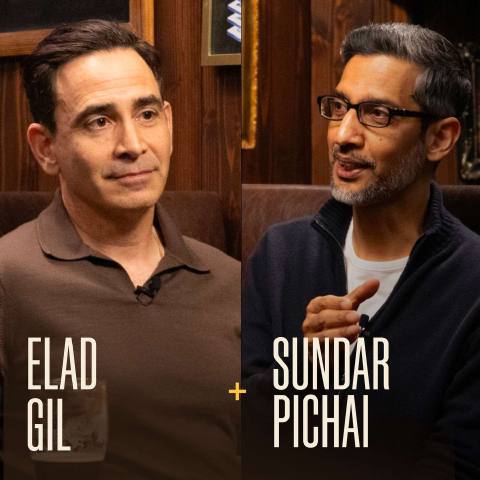
Back to The history and future of AI at Google, with Sundar Pichai, with Sundar Pichai.
What Limits AI Adoption Inside a Large Company?
Sundar Pichai says the Gemini teams, the Gemini enterprise teams, and the Anti-Gravity teams are working on the adoption problems that show up once the models are already capable. Google hits those barriers by using the tools internally, and the products now shipping are the attempt to get past them. The spread is still uneven. An SRE team finds a slice of work it can turn into an automated workflow, and that happens in spots. Making it systematic means skills have to be centralized so the models, and everyone else, can use them.
Identity and access controls are real hard problems, and they limit how far this spreads inside Google too. Security is another layer, because the cost of a mistake on these services is high. Google is paying that fixed cost now. When it is solved, the same work should show up outside in a more robust way, while the models keep improving.
The history and future of AI at Google, with Sundar Pichai ·
From the transcript
What do you think that adoption of the intelligence looks like? Look, a lot of us are working on
like literally what the Gemini teams, the Gemini enterprise teams and the anti-gravity teams, they're all precisely working on these problems. This is the roadmap you're talking about, right? Like, you know, and that's literally, we are using it internally, running into these barriers, kind of working past it. So that's the products that are shipping.
We are still diffusing it because what you do is people as part of using it, like if you're the SRE team at Google, you suddenly find portions which you can create an automated workflow. And so that's happening in like these spots, right? But doing it more systematically when you develop skills, how does it get centralized? How is it available to the models and for everyone to use? Identity access controls are real hard problems.