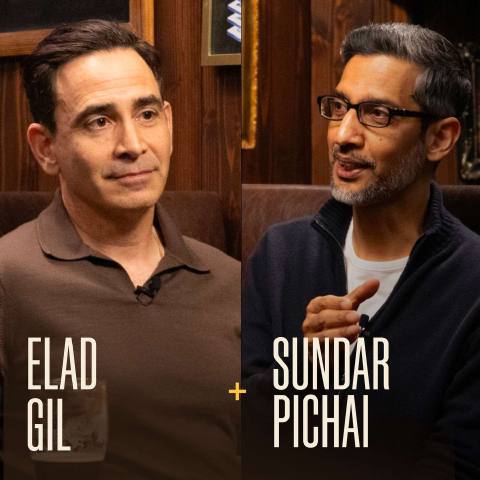
Back to The history and future of AI at Google, with Sundar Pichai, with Sundar Pichai.
Why Did Google Design Gemini to Be Multimodal?
Sundar Pichai says the model where people first saw Google at the frontier was probably Gemini 2.5, and the strength was multimodality. He does not try to track every outside timeline. The credit goes to the Google DeepMind teams. Google paid more of a fixed cost up front and designed the Gemini models to be multimodal from day one, rather than adding modalities later. That is where the strength started to show, and Nano Banana was a place the pieces showed up together.
The frontier is two or three labs pushing each other. In a given month Google can feel ahead and then behind on a couple of things. The picture will be dynamic again within a few months.
The history and future of AI at Google, with Sundar Pichai ·
From the transcript
So we underestimate the growth scenario of how all these things work, right? So, but we had to execute better as a company. So that's what I meant by, I was more focused on that. Was there something that demonstrated to the outside world that, oh, they got this? Was it Gemini 3 that changed people's minds? I don't follow all the timelines.
I think the real model probably where people saw it was maybe Gemini 2.5. And, you know, I'm getting to the frontier on that.
particularly around multimodality. We made a bunch of, credit to the Google DeepMind teams, right? I think we paid a bit more of a fixed cost upfront but we designed the Gemini models to be very multimodal from day one. And so there were areas, I think, we started, the strength started showing. Nanobanana was an example of it. So you were able to see it all together.