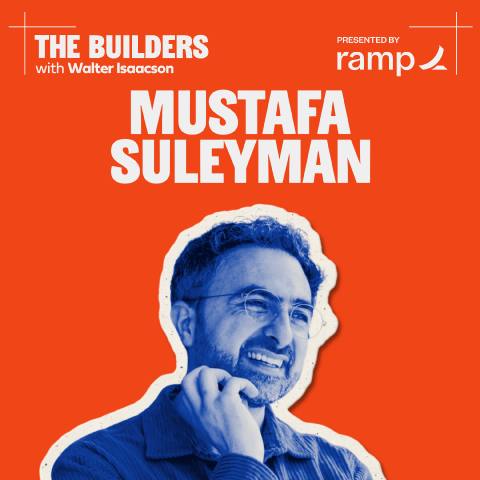
Back to Mustafa Suleyman: AI Should Serve Humanity, Not Replace It, with Mustafa Suleyman.
Does Mustafa Suleyman Think Minds Must Leave Biology?
Mustafa Suleyman is skeptical of the idea that minds must leave biology. Walter Isaacson notes that at Oxford he studied philosophy and theology rather than coding. Mustafa says he was interested in theology because he grew up in a religious environment and then rejected religion. He is skeptical of faith-based ideas and of how much power they have had for thousands of years. Physics, maths, science, and evidence that can be tested are, in his account, building a foundation people can trust, even though he is still interested in the mystical and the mythical.
What he pushes back on is a fervor he sees at Anthropic and elsewhere in Silicon Valley: that people are about to move experience, ideas, or maybe a soul onto a silicon substrate, and that this non-biological future is inevitable. He does not think a soul is the point. His reason is the 8 billion people whose rights and welfare should come first. That, he says, is what science and technology are for, and what he wants to accelerate. He calls himself a techno-accelerationist, guided by one test: does it improve human wellbeing, and after that the animals and the environment.
Mustafa Suleyman: AI Should Serve Humanity, Not Replace It ·
From the transcript
At Oxford, you never did coding or engineering, right? And I think that's a good sign, I mean, in some ways. And like Amanda Askell at Anthropic and others, you studied philosophy and theology, right? How did that inform what you do with AI? Yeah, I mean, philosophy prioritizes clear thinking and structure. And, you know, I think that I've always found that like sort of thinking abstractly and conceptually has a lot of overlap with engineering and particularly, you know, algorithms.
Many algorithm developers or AI researchers aren't necessarily great engineers. Engineering is sort of the execution part. Coming up with the algorithm, the loops, how certain variables are weighted, those things are sort of abstract ideas that then produce outcomes which can be evaluated and tested. Which is exactly what philosophers do when they're in an analytic context.