Smash Notes

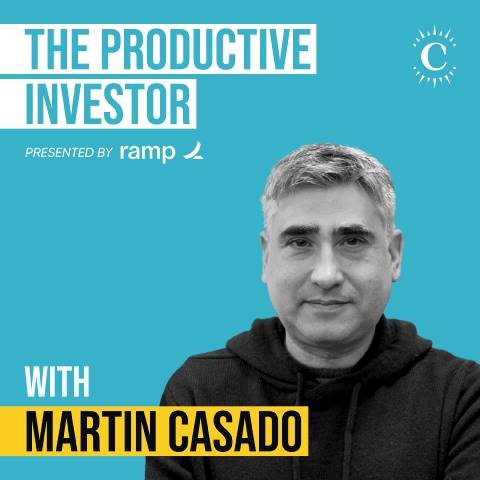
Back to Martin Casado on Frontier Model Economics, AI's Slowdown, and the Cursor Deal, with Martin Casado.

What Are the Four Venture Investing Mindsets?

Martin Casado names four mindsets people bring to venture and private-market tech investing: a traditional finance mindset, productive investors, frontier investing, and speculative investors. A decade and hundreds of deals showed that investors in the same discussion were not communicating well.

The traditional finance mindset treats the market a business is entering, and its finances, as the correct proxy for the health of the whole company. Software-as-a-service metrics and the size of the market stand in for the business. Growth investors use it, and more early-stage Series A investors do too, which is a little discordant so early. Productive investors believe they are buying a productive asset. The asset creates value, the value creates a market, and the business has to catch up to the value. Diligence asks about the technical approach, the adjacent markets, how fast the asset is likely to evolve, how close it is to capturing value, and whether the team can build it. Frontier investing is the romantic, idealized venture capital of the 1960s and 1970s. Founders know better than investors, they have seen something the investor has not, and the investor does not second-guess them. The pattern looks like a talent network. Chris Dixon invested in nootropics, Soylent, Oculus, Coinbase, and crypto, science-fiction tropes from the 1970s and 1980s, without overthinking any of them. Frontier investing is the strong form of productive investing. The last mindset is speculative investors, and it is always surprising how prevalent they are.

Grokipedia·Martin Casado·Chris Dixon

Transcript

Martin Casado on Frontier Model Economics, AI's Slowdown, and the Cursor Deal ·
Invest Like the Best with Patrick O'Shaughnessy

More from this episode

  1. What Does Martin Casado Think of Network Effects?Martin Casado calls the fuss over network effects a personal annoyance and a pedantic habit. Defensibility is not really worth talking about most of the time.
  2. Why Do Traditional Investors Miss Disruptive Technology?Martin Casado says traditional investors miss disruptive technology because they judge revenue quality before anyone knows the pricing model.
  3. How Do Frontier AI Models Keep Pricing Power?Martin Casado says frontier AI models keep pricing power because the market is still large and growing, and buyers want the smartest model.
  4. Why Do Startups Always Buy the Smartest AI Model?Martin Casado says two competing startups never pick a dumber model to get ahead.
  5. Was Early Internet Security Worse Than Now?Martin Casado lived through the early internet on the ground, with formal studies in security, and the era was way worse than the breaches happening now.
  6. What Is the Mythical Man Month?Martin Casado says the mythical man month means you cannot increase the speed of engineering by adding people.
  7. What Was Larry Page Asked About Orbital Compute?Martin Casado heard that someone asked Larry Page how much compute will be orbital.
  8. What Does Martin Casado Believe About Private Market Money?Martin Casado believes money put into private markets grows private markets.
  9. How Did the Cursor Deal Come Together?Martin Casado says the Cursor deal came together off a raise that was already closing, once building models required compute few people have.
  10. Has Software Become a Capital Problem?Martin Casado believes software has become a capital problem, and he treats the shift as industrial-revolution scale.

People

More answers like this

More with Martin Casado

Related episodes

Plays from this note through the rest of the episode.

Weekly highlights

One letter a week.

The notes worth hearing, with the minute they were said.