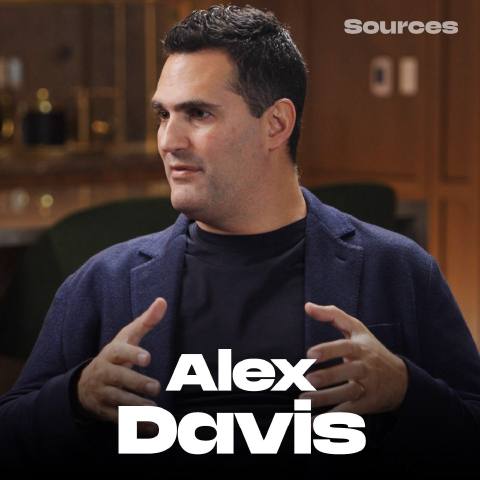
Back to A quiet investor’s $10 billion bet on AI, chips, and defense, with Alex Davis.
What Is Alex Davis Building at Groq After the Nvidia Deal?
Alex Heath describes an early investment in Groq, the inference-chip company, and a $20 billion licensing deal with Nvidia. Jonathan and much of the core team went to Nvidia. The assets stayed, and Alex Davis is running them as an inference cloud. Davis says he is usually not that early. The team was willing to change its story, and Jonathan was an easy person to back.
The deal he describes is a non-exclusive license that closed very fast at the end of last year. Most investors would have distributed the proceeds. People instead went to Nvidia to help build chips, and the sites still had to serve inference for running models and for reinforcement learning. Groq had about 53 megawatts already. Rather than end the data-center leases, the plan was to reinvest, retrofit sites that now need liquid cooling, and become a customer of the later LPX chip and of Vera Rubin. Companies the firm has backed are short of compute, so the sites can supply them and, as an inference neocloud, the largest cloud buyers too. That is why he took the executive chair. He does not know if running the company himself is the long-term plan. He has been in the seat about six or eight months and has watched it grow.
A quiet investor’s $10 billion bet on AI, chips, and defense ·
From the transcript
largely in thinking it's probably undervalued in the privates versus where it will be when it's public. And I think that was probably a fairly easy bet to make in the fact that he would just win the public over. And he has. I think he's become one of the more iconic CEOs, and he deserves it. Let's talk about another quintessential investment I think you've made, Grok.
So you were involved early in Grok, you know, the inference chip company that was really prescient, I think, in setting up its own compute, and then did this very interesting deal with NVIDIA, this $20 billion licensing deal, where, you know, Jonathan and a lot of the core team went to NVIDIA, but the assets remained, and you're now running those.