Smash Notes

Back to A quiet investor’s $10 billion bet on AI, chips, and defense, with Alex Davis.

Why Does Alex Davis Only Back Companies That Are Already Winning?

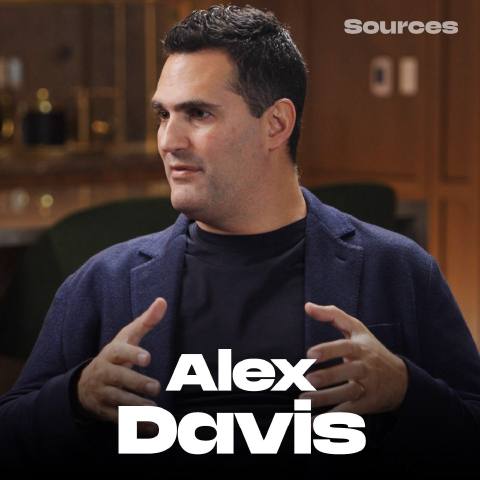
Alex Davis says Disruptive was not built as a fee business by people who had left banking for venture. The question was whether private companies that already looked headed for the public market could be bought before the listing, first for friends and a few institutions, and whether that could be a firm. What stayed true, in 2012 and again over the last year, is a short list of companies that are alone in their category, and the demand to own them early.

Amazon, about 25 years ago, is his picture of the point. He remembers it then as a $300 million private company with a $60 million public float. It looked expensive. It is a $3 trillion business now. A basis that starts before a company like that is public is the case for the strategy. Picking companies with no product-market fit and no technical breakthrough is the harder job, and it is not this job. He wants companies that are already winning. The comparison is an undefeated team with one game left and a likely trip to the Super Bowl. Would you bet on that team, and could you still get odds where the upside is not capped? His view is that you could.

Transcript

A quiet investor’s $10 billion bet on AI, chips, and defense ·
Sources with Alex Heath

More from this episode

  1. Why Raise a $10 Billion Fund When Valuations Look Frothy?Alex Heath asks why announce a $10 billion growth fund when valuations look frothy.
  2. How Does a $10 Billion Fund Become Ten Checks?Alex Davis says the firm has already been writing some of the largest checks in growth-stage companies, especially over the last five or six years, after 15…
  3. Why Are Top Startups Blocking SPV Investors?Alex Heath asks why leave deal-by-deal vehicles, where limited partners could see each company, for a fund. Alex Davis says this is the first real fund.
  4. Why Invest More After a Startup's Valuation Goes Up?Alex Davis keeps the list of companies Disruptive wants to own. Sometimes it is 20 names, sometimes 15, and he holds the list. Names come on and off.
  5. Why Did Alex Davis Double Down on Palantir Before Its IPO?Alex Davis says Disruptive had been in Palantir for about 10 years when COVID arrived.
  6. What Is Alex Davis Building at Groq After the Nvidia Deal?Alex Heath describes an early investment in Groq, the inference-chip company, and a $20 billion licensing deal with Nvidia.
  7. Why Will Speculative Data-center Landlords Get Hurt?Alex Davis does not think there are too many neoclouds. He thinks there are not enough good ones.
  8. Will Defense Startups Become the New Prime Contractors?Alex Davis expects new prime contractors for the first time in 100 years, and a defense-tech market that does not look like the old one.
  9. Is Value Investing Dead?Alex Davis says the only thing he wrestles with before writing a check is regulatory, meaning whether a regulatory problem was a reason to pass.
  10. Why Does Alex Davis Wish He Had Backed Closed Models Harder?Alex Davis does not point to regrets in what Disruptive did. Fifteen years later he does know answers he did not have then.

People

More answers like this

The other side

More with Alex Heath

Related episodes

Plays from this note through the rest of the episode.

Weekly highlights

One letter a week.

The notes worth hearing, with the minute they were said.