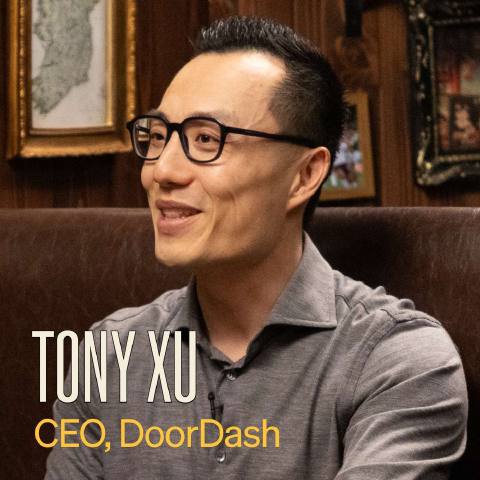
Back to The economics and trends of the restaurant industry, with Tony Xu of DoorDash, with Tony Xu.
Why Did Google Food Ordering Fail to Keep Customers?
Tony Xu says Google food ordering could send lots of traffic from Google Maps and Google Search, but it could not get retention. It launched in 2015 or 16, and he does not remember which year. The service was low friction, and a lot still happens after the checkout button.
Google did not know how to contact the driver, whether the driver could not find the customer, whether something was taking a little longer, or whether an item was out of stock. A chat interface is not obviously the correct interface, because many components still have to be solved. With a product like DoorDash, the company has to do the whole thing end to end, or keep great coordination, because cool interface work only earns a place when the logistics are right and orders show up on time.
As AI apps develop app ecosystems and relationships with companies like DoorDash, that channel will be a source of top of funnel. The hard part is delivering on the promise. On DoorDash's own surface or on other people's surfaces, failing to solve the end-to-end job means the ordering interface will not matter.
The economics and trends of the restaurant industry, with Tony Xu of DoorDash ·
From the transcript
It's like, let's just order again what we ordered on Sunday. You should be able to make that natural language query and have it take care of interfacing with DoorDash and payment and everything like that. I'm curious how you guys think about the interface changing. Do you want to enable people to order within the AI apps? Do you want to have just more of a natural language input to DoorDash? How is that going to happen, given that that is presumably what people want in terms of the low-friction AI experience? Yeah, well, I think what people want is definitely low friction, but I think people also want the products to show up, you know, on time.
And I think they want... You only get a right to do this cool UI stuff if the logistics is right. And the challenge with a product like a DoorDash is you kind of have to do the whole thing end-to-end. Or you have to have, you know, great coordination or communication mechanisms. And so... We definitely agree with you that I think there's definitely going to be a place where in the future as these AIs develop their