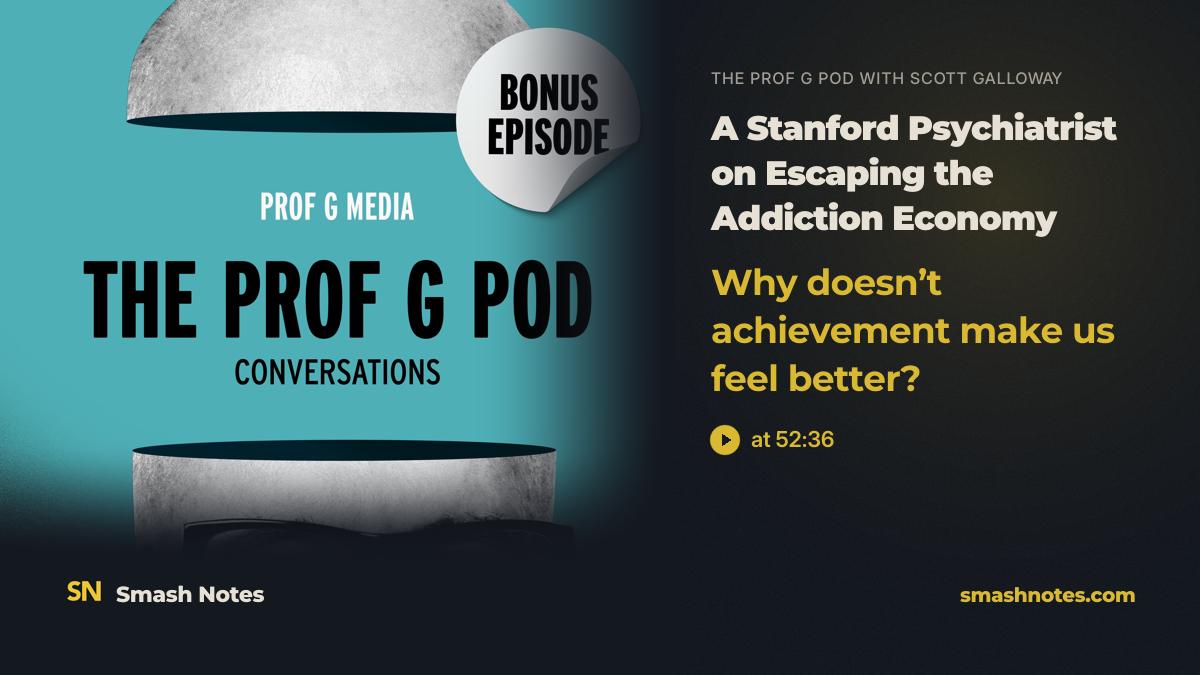
A Stanford Psychiatrist on Escaping the Addiction Economy
Dr. Anna Lembke, Stanford psychiatrist and bestselling author of Dopamine Nation, joins Scott Galloway to discuss our dependence on validation – and why achievement doesn’t always make us feel better about ourselves. Drawing on her new book, Radical Surrender, she explains how to recognize addictive behavior, when parenting becomes enabling, and why…
People
Notes
-
-
-
-
-
-
-
-
-
What Is Endemic Narcissism? at 54:56
-
How Does Prayer Right-size the Ego? at 1:00:28
Related notes
- Why Does Laura Markham Favor Resilience Over Protection?
- Why Does Removing Phones From Schools Improve Outcomes for Students?
- How Do You Stop Feeling Behind Successful People?
- Does More Than Three Hours of Social Media Double Anxiety?
- Why Do Kids Stay on Social Media If It Feels Worse?
- Can Imposter Syndrome Be a Good Thing
Related episodes
-
![]() Anthropic's IPO Filing, Elon's Talarico Obsession, and Elizabeth Holmes' Box Office Surprise
-
![]() Josh Brown: If This Is A Bubble, It’s Pathetic
-
![]() The $3.5T Bailout: Elon's Plan To Merge Tesla And SpaceX
-
![]() TikTok, Time's Up on Facebook's Content Moderation Sites
-
![]() Let Go of Expectations and Attract What You Desire | Lewis Howes
-
![]() Peaceful Parenting
-
![]() Impostor Syndrome
-
![]() Adam Grant #4 (on the secrets of strong connections)