Back to The $2B AI Startup Simulating Human Behavior with 85% Accuracy, with Joon Sung Park.
Why Does Joon Sung Park Think We Live in a Simulation?
Joon Sung Park thinks we live in a simulation because any civilization will recreate itself to understand itself. People ask him often because of the technology he is building, and the experience still has to feel real and true to who we are.
Humans and societies like ours always want to understand themselves better. The best way to understand something is to recreate it. A simulation is a portrait of who we are as a society, and making one is an innate desire for a civilization like ours. Any civilization will create a simulation, and at some point we likely live in one.
A society rests on quantum building blocks of people's tastes and behaviors. Inherent characteristics might be among them, and people's risk tolerance is not really known to change. A person holds certain aesthetics they really enjoy. The traits come together as individuals, and individuals are the building blocks of larger societies. Simulations start with individuals, built to faithfully and accurately represent a diverse persona and the characteristics and behaviors of a person. A civilization-scale simulation puts the people into one environment and lets them interact with each other.
The $2B AI Startup Simulating Human Behavior with 85% Accuracy ·
From the transcript
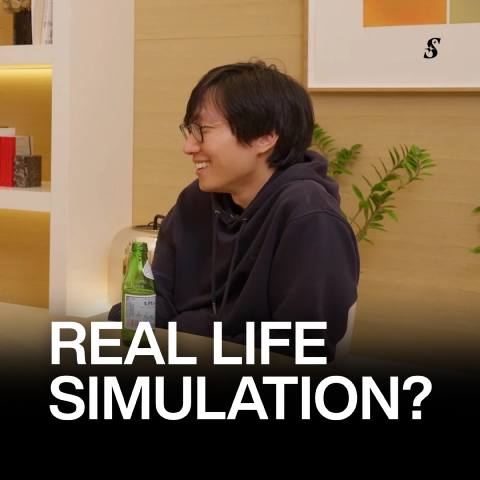
I don't know exactly what simulations are, but I find it fascinating. Elon Musk thinks there could be a probability that we live in a simulation. So what does that mean to you? Well, you know, I do think we live in a simulation. You do? I do. Explain. Well, and of course, not surprisingly, because of the company that we're building and technology that we're building, we do get asked this question quite frequently.
And at some point, I started to just say, hey, no, we live in a simulation. But I think the part that actually does matter more to me is at the end of the day, is the experience that we're having actually real? Does it feel real to us? Is this true to who we are? I think at the end of the day, that's what matters. Probability wise, I think it's a pretty good argument that humans and societies like ours will always have desire to better understand itself.