Smash Notes

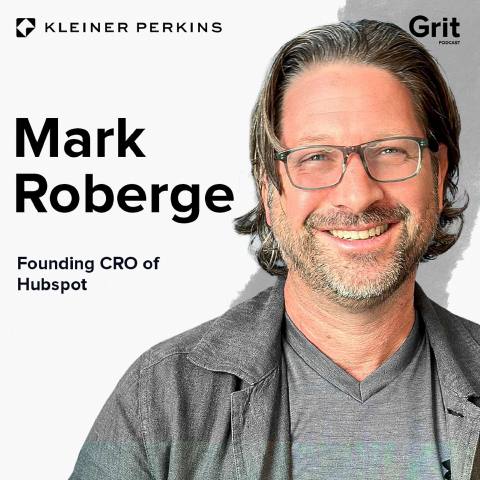
Back to The Sales Framework Every Founder Needs | Mark Roberge, with Mark Roberge.

What Should Non-builders Do Instead of Founding?

Mark Roberge tells his business school students not to start a company unless they are builders. When a student asks what to do and says they are thinking about starting a company, he asks whether they code or have ever made apparel. If they are not a builder, he tells them not to start anything and to join early, because zero to one is building.

For a tech company, he sends them to MIT to hang out in the AI media club and find three genius 22-year-olds. The offer is to do everything about the business except the code. The coders assume the new person will run payroll. The real work is sales, marketing, business development, customer success, and finance. If the company takes off, that early joiner becomes chief operating officer. The coders still think the job is payroll, because they do not realize a startup involves anything besides writing the code.

Transcript

The Sales Framework Every Founder Needs | Mark Roberge ·

From the transcript

It definitely is more tech oriented, which it should be. Yeah. And, but if you error toward like you, you start drawing the line at like series B plus, which you're still doing entrepreneurship. Yeah. It gets a little heavier. Yeah. But yeah, it's fair. I always try to convince my MBA students not to start. They're like, hey, professor, what should I do? I'm thinking about starting a company.

I'm like, okay, tell me about your background. Do you code or have you ever made apparel before? Are you a builder? No, don't start anything. Early join.

Cause like the zero to one is building. Yeah. You get it right. It's just like, go, what do you want to do? A tech company? Cool. Go over to MIT. Hang out in the like, whatever AI media club and just find frigging three genius 22 year olds and say, you'll do everything except all the other stuff about the business, but code. And they're going to look at you and say, Oh great.
See in transcript

Grit

More from this episode

  1. What Is Product Market Fit If Not Revenue?Mark Roberge says product market fit based on revenue or customer count is the wrong test, because it only shows a company can sell.
  2. Why Does Sales Commission Still Beat No Commission?Mark Roberge says sales is the only function on a commission plan because success in that role is so quantifiable, and an A/B test of commission against no…
  3. Does Mark Roberge Expect to Operate Again?Mark Roberge does not expect to go back to operating. Crazy offers have been tempting, and he still does not think he will take one.
  4. Why Do Great Startups Go Flat When They Scale?Mark Roberge found that great products and great teams still went flat or bankrupt when they scaled revenue at the wrong time and the wrong pace.
  5. What Is a Leading Indicator of Customer Retention?Mark Roberge defines a leading indicator of retention as three variables: the percent of customers who do a chosen event every set period of time.
  6. What Is Go-to-market Fit?Mark Roberge says go-to-market fit means a company can keep creating the value it already proved in product market fit, consistently and profitably.
  7. Why Is Software Retention Mostly a Sales Problem?Mark Roberge says retention has been a killer to so many software businesses over the last two decades, and the cause is mostly a sales issue.
  8. How Should Founders Hire Sales Reps?Mark Roberge says founders should hire sales reps on a steady monthly pace.
  9. Why Do Founders Skip Burn Math in an AI Boom?Mark Roberge says founders skip the burn math because venture money and an AI budget are falling from the sky, and a founder with a strong product treats the…
  10. Should Valuation Set How Fast a Startup Scales?Mark Roberge says the revenue a startup achieves in 2026, 2027, and 2028 should not have a lot to do with how much money it raised or at what valuation.

People

More answers like this

The other side

More with Joubin Mirzadegan

Related episodes

Plays from this note through the rest of the episode.

Weekly highlights

One letter a week.

The notes worth hearing, with the minute they were said.