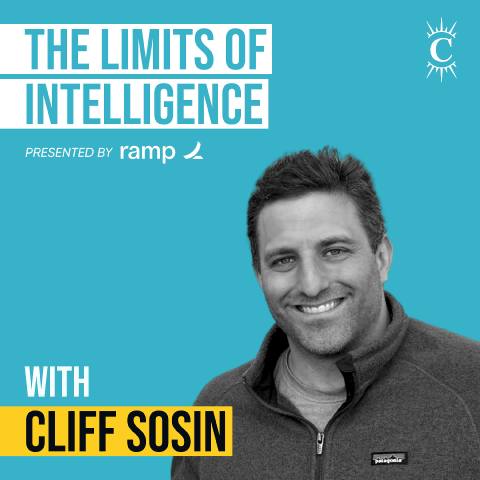
Back to Cliff Sosin - Owning the Complements to Intelligence, with Cliff Sosin.
Who Makes Money When AI Intelligence Gets Cheap?
Cliff Sosin says the businesses that benefit when intelligence gets cheap own the complements to intelligence, not the intelligence itself. Assume everyone already has very good intelligence, and ask what is left. The complements he names are data, attention, affection, physical proximity, scale, and, more cynically, regulatory capture. A product that is only a hardened piece of intelligence can be hurt, because a general model does that work. A company held back by the cost of intelligence can be helped once that cost falls. A company whose profits depend on customers being too tired to shop around can be hurt.
Meta is his example. He calls the core business personalized TV. It used to be social media, and now people watch short videos. In a reductionist sketch he says not to take literally, Meta has about $250 billion of revenue and spends about $250 billion a year, nearly all of it some form of intelligence: data centers, inference, algorithms, code, and sorting video. If the price of intelligence falls by something like a factor of 100 over five years, those costs shrink, creators can make better video more cheaply, and ads can be aimed more tightly. Cheap intelligence does not destroy the viewing data or the attention Meta already holds. He does not think people will stop watching short videos. This is his view of the business, not a recommendation.
Cliff Sosin - Owning the Complements to Intelligence ·
From the transcript
And what many software tools are, are crystallized and hardened pieces, like projections of intelligence. And so as I've been thinking about companies and investments, I found it helpful to assume everyone has really great intelligence and ask what's left. The pushback is often some version of, but you don't understand how hard this is, and you don't understand how complicated this is, and you don't understand how many smart people have had to think for so long about this.
And my hand wavy and approximately right response is, okay, sure, but that's all just intelligence. And to follow this logic all the way through to the end is, if intelligence becomes cheap and ubiquitous, What you want to own are the complements to intelligence. And so the complements to intelligence are their data, attention, love, affection, whatever sort of emotional attachment you want.