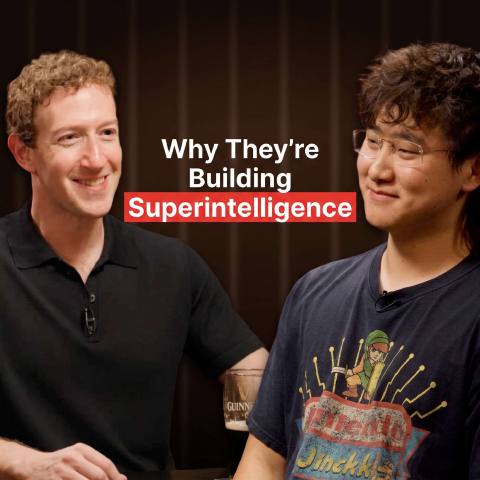
Back to Muse Wonder: Zuckerberg and Wang's $100B AI, with Mark Zuckerberg & Alexandr Wang.
How Big Should a Pre-training Team Be?
John Collison · Mark Zuckerberg · Alexandr Wang
Mark Zuckerberg says he does not know how big a pre-training team is, and it does not need to be that big. Other labs are probably quite big. The models are doing well because the people Meta is betting on have a lot of resources. Compute stays with the key people instead of being spread across a lot of competing efforts, with a lot of compute per researcher so they can do the work.
Wonder was the next pre-train and climbed a ladder through a tiering system, and then came Spark. Avocado was the internal codename for the Muse Spark line, and Watermelon was the codename after it. The fruit names are used up. Durian is the only fruit that is technically larger, and it is heavier and spikier.
Alexandr Wang puts each stage at tens of people working on it at Meta versus hundreds. Meta is a huge company, and the research effort is really tiny. The research team is less than 200 people, very small, and intentionally very tight.
Muse Wonder: Zuckerberg and Wang's $100B AI ·
From the transcript
So I don't know the answer of like how big is a pre-training team. It doesn't need to be that big. But I think if you look at some of the other labs, it's probably quite big in some other places. So I think part of the reason why these models are doing well is because you you have people who we're betting on and they have a lot of resources because we're taking our compute, we're not peanut buttering across a lot of competing efforts.
We're basically just investing in the key people, a lot of compute per researcher, and then they can do their work. Was Wonder the one big training at first? It was the next pre-train. It was climbing up this ladder, so we have this tiering system, and then Spark. Internally, Avocado was the codename for the Muse Spark line, and then Watermelon was the codename for this one, and we're out of fruits now.