When Did New Zealand Start Targeting Inflation?
It started in New Zealand in 1980s, when going through a rough economic period, they did an extremely successful experiment and managed to control country's inflation to ~3%
Radio
Education. One note, then the next.
It started in New Zealand in 1980s, when going through a rough economic period, they did an extremely successful experiment and managed to control country's inflation to ~3%
Milton Friedman on Moneyat 15:42

He did not want to start a podcast, but when Jeff Meyerson volunteered to help, and gave Courtland an entire playbook on doing a podcast, Courtland had no choice. He started a podcast.
Courtland Allen on growing downloads and community through storytelling and podcastingat 23:18

Hanselminutes with Scott Hanselman
DNSimple gets record changes out through its own internal transfer system, and the bar for that system is Australia. The authoritative network has eight points of presence, data has to travel from the primary data center in the US to the furthest one, and default time-to-live values are set fairly low so a caching name server does not sit on a record for a day.
On Hanselminutes, Scott Hanselman said he stuck with DNSimple because a change such as exampleapp.hanselman.com showed up on refresh, and a text record for a certificate was visible when he went back to the command line. People updating a C name at GoDaddy would wait about 12 to 15 minutes for changes to propagate, and the demo never

Companies die when they fail to perceive and adopt to the future. It is essential to the success of a company to reinvent themselves, with care.
How to make a million dollars - Lessons Learned From 1,000-Plus Investmentsat 24:37

Jeanette, host of Excuse My ADHD, says a Facebook post is what made her skip the textbook definition. Someone was annoyed that people compare ADHD with autism, because they did not think ADHD was impairing at all. Jeanette agrees that autism can be much more impairing, depending on where a person sits on the spectrum. Her objection is the picture of ADHD that comparison usually leaves behind: a boy in class who cannot sit still. She could sit still and read for hours. She says the DSM lists on the order of 90 ADHD symptoms, and hyperfocus was the one nobody had described to her.
Everything I amat 1:15

Jason wants founders who are resilient, and hungry for the opportunity. The founders gotta know their numbers, have revenue, and be proactive about chasing their dream. They have to be serious about their mission.

John Coogan left Soylent because the company was pretty mature, he was running e-commerce, and the business no longer needed a software team. He wanted other work while Soylent pivoted to retail, a make-or-break move for a direct-to-consumer brand that started online.
VCs crowded in because online growth was so strong, and many believed e-commerce was the future. E-commerce still grows slowly, so the brand eventually grows at the rate of e-commerce. E-commerce is maybe 10 or 20 percent of overall commerce, much of it TVs, books, and other goods that ship easily, while a lot of groceries are still not sold online. Soylent had penetrated the total TAM of online protein powder supplements and

Walker suggests for someone to practice small local adventures. There are certain things you pass by that you have never experienced. It starts with having more curiosity to open us up to different ways to look at our communities.
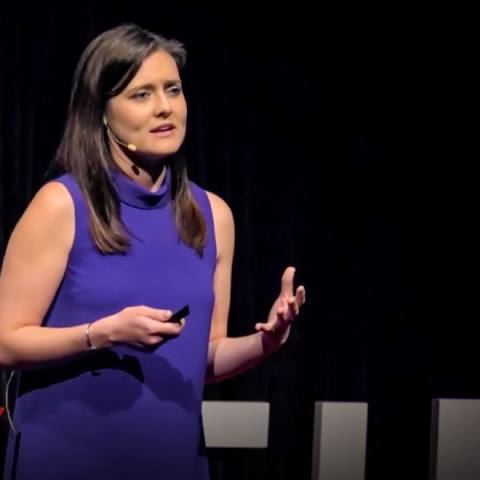
In the US, the suspect has to request to have a parent or attorney in the room. In other countries like England and Wales, juvenile interrogations must be in the presence of an appropriate adult, like a parent, guardian, or social worker. The youth doesn’t have to ask for one, it’s automatic, unlike in the US.
Why teens confess to crimes they didn't commit | Lindsay Malloyat 13:26

One panelist says Trump basically adopted modern monetary theory, so anyone who supports the theory has to support part of what Trump is doing.
Stephanie Kelton comes up first, along with modern monetary theory and the claim that it does not matter. Supporting the theory after Trump took it up means supporting the Republican side, not every decision. If money really is free, a lot of the Republican budget decisions that helped get the country to its current state sit inside that view. The Biden administration did its part too. What follows is having to embrace some of Trump's economic policies, and maybe that embrace is a problem.

Christopher Lochhead says a legendary company is not trying to be a bit better than the incumbent. It aims at an exponential difference and opens a new category, a new way of living, thinking, or doing business. Category makers design a different future. Others profit from the world staying put. His examples are Airbnb, which sounded absurd when the offer was a couch; Google; Amazon, one person about 25 years before the episode; Palo Alto Networks; Cisco; and Salesforce. Each built an offering, an organization, and a category together. He also points to Cards Against Humanity co-creator Max Temkin, a guest on Lochhead's other show, Follow Your Different.

Mel Robbins says the person who changed how she thinks about empathy is Dr. Stuart Ablon. She describes him as an award-winning psychologist, a professor at Harvard Medical School, and the founder and director of Think Kids, a program at Mass General Hospital. She says he has been researching and helping kids for 30 years. When she asked how he thinks about the word empathy, he answered with one word: understanding.
Mel Robbins says empathy is understanding another person: what they are feeling, what their perspective is, and what they are dealing with, before you judge, jump in to fix, give an opinion, or make up your mind. She says researchers at the University of Toronto studied everyday
Plays this note, then the next one. Stay on this episode to keep listening.
Original audio is not currently available.